Sunday, March 6, 2011

3-2-1


I learned about how pasteurization was discovered, and who discovered it.  I also learned that many European colonies controlled Africa. And finally, I learned the pros and cons of Imperialism.  I found it interesting that bakers used dangerous chemicals to color cakes.  And finally that there were so many Victorian manners.  My only question is how was Menelik II able to keep Ethiopia free?

Mahatma Gandhi

"You must be the change you wish to see in the world." 
Mahatma Gandhi

To me the meaning of this quote is fairly obvious, in order to see the change you desire, you must be a part of the change yourself.  Personally, I consider this to be one of the simplest and most insightful things to have ever been said.  Gandhi wanted people to realize that wanting change was not enough,  it required those people to work toward the change.


Suez Canal

The Suez canal is an artificial waterway that connects the Mediterranean Sea and the Red Sea, it allows transportation between Europe, and Asia without having to navigate around Africa.  This canal is the shortest link between the east and the west.  The canal is under the control of Egypt and approximately 18,193 ships use it.  This canal is very important because it allows ships to travel faster, and it costs less.  The canal plays a big role in world trade, so its existence affects everyone.

The Resistance of Ethiopia

Italy, France, and Britain were all trying to influence Ethiopia, but its leader, Menelik II would not have it.  He built up a large arsenal of modern weapons, that he purchased from Russia and France, ready for anything.  When reading a peace treaty from Italy, Menelik realized that there were differences in the wording between Amharic and Italian.  When he read the document he thought he was only giving up a small piece of Ethiopia, but Italy claimed all of Ethiopia as a protectorate.  Menelik declared war against Italy, and Ethiopia successfully defeated Italy and retained its independence.

Direct Control

One way for an empire to control a colony is direct.  The empire would provide its own officials to rule the colony, rather then allowing the local government to rule.  The officials would provide the people with their needs, but without their rights.  All of the government is based upon European styles, and the goal is assimilation.  An example of this type of control would be the French colony in Somaliland, Vietnam.

Imperialism

Imperialism is a policy in which a strong nation seeks to dominate other countries politically, economically, or socially.  Its a policy that has both helped, and hurt the world.  In Africa, imperialism took over, and the land became many different European colonies.  These colonies brought with them modern technology, and helped boost the economy.  They also helped to educate the African people.  And they built better health care facilities.  But the colonies only cared about themselves.  Most Africans were forced into slavery, and had their basic rights taken away.  They lost most of their culture, and their languages were forgetten.  Finally, many Africans were shipped, against their will, to England and America to become slaves on plantations.  Although Imperialism could help people, it often led to the mistreatment of the native people, and a loss of mans natural born rights.

Saturday, March 5, 2011

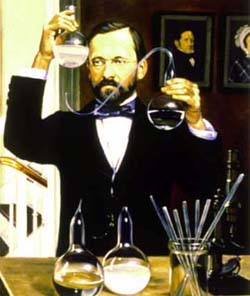
The Germ Theory of Disease: Pasteurization

In the mid-1800s a French chemist named Louis Pasteur discovered, while examining the fermentation of alcohol, that the process is caused by microscopic organisms he named bacteria. Upon further examination he discovered that high heat killed the bacteria.  This was very important because it led to the discovery that bacteria can cause disease.  This discovery led him to develop the method of pasteurization, that we use most commonly today to kill germs in milk.

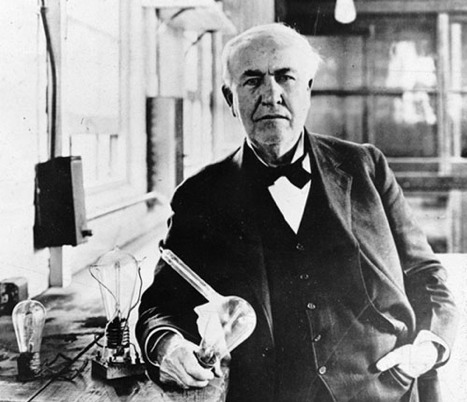
The Light Bulb

The light bulb was created in the year of 1879 by the inventor Thomas Edison, this Edison invention used electricity to create incandescent light. It provided homes with a reliable, and long-lasting source of light. This invention created better light for homes both at night, and day, and it made it easier to work at night.  To this day we use light bulbs!

Source: http://inventors.about.com/library/inventors/bledison.htm

Chapter 10-11: An Age of Democracy and Progress (1815-1914)

Western nations began going under dramatic change from urbanization and industrialization.  People wanted to find solutions to the problems created by the new developments, and reform.  They wanted improved conditions for the poor and workers, and for ordinary people to have a greater voice in the government.  These demands led to democratic reforms in both Great Britain, and France.  This led the to the democracies they have become today.

Objective: To learn about how the ordinary people were able to attain greater voices in the government.